What is GEO? Why Your Website Isn’t Being Recommended by AI
Search has changed. Half your future buyers will discover you through ChatGPT, Perplexity, and Gemini — not Google. Here is the 2026 playbook.
Take a close look at how people now find brands. Increasingly, they do not type a keyword into Google and click a blue link. They ask ChatGPT, Perplexity, or Gemini a full question — and the AI returns one synthesized answer with two or three sources cited. If your brand is not in those two or three sources, you do not exist in that conversation.
This is the problem GEO solves. SEO ranks you on Google. GEO gets you mentioned by AI.
What is GEO?
GEO stands for Generative Engine Optimization. It is the practice of optimizing your website, content, and digital footprint so that generative AI engines — ChatGPT, Perplexity, Gemini, Claude, Copilot, Grok — cite, quote, or recommend your brand when users ask questions.
The shift is simple. When a user asks ChatGPT “what is the best wholesale clothing supplier in Thailand?”, the AI does not return ten blue links. It returns one answer with two or three sources cited. If your brand is not in those two or three sources, you do not exist in that conversation.
How to Do GEO — The 5 Inputs
GEO has five concrete inputs. AI engines crawl, evaluate, and weight each one when deciding who to mention.
Be the source of truth on a specific question
Pick a narrow topic. Write the most complete, structured, factual answer on the internet. AI rewards depth over breadth.
Use clean semantic structure
Proper H1/H2/H3 hierarchy, bullet lists for facts, tables for comparisons. AI parses HTML to extract answers — messy formatting kills visibility.
Cite original data, sources, and statistics
AI engines prefer pages that themselves cite authoritative data. Numbers, dates, named studies, expert quotes signal trust.
Build cross-mentions across the web
When 10+ independent sites mention your brand in context, AI engines treat you as authoritative — PR, guest posts, podcasts, Reddit, Quora, YouTube, Wikipedia.
Make your site machine-readable
Schema.org markup, structured data, an llms.txt file. If a bot cannot parse your page in 200ms, you lose.
How to Optimize GEO Continuously
Optimization means improving the five inputs above continuously. Tactically:
- Answer questions in the first 100 words. AI engines extract the first clear answer they find. Bury it and you are skipped.
- Use Q&A format. Mirror how users phrase prompts: “How do I…”, “What is…”, “Why does…”. Match that phrasing in headings.
- Add original primary research. AI rewards unique data. Surveys, case studies, internal benchmarks — anything not found in 50 other places.
- Date your content. “Updated May 2026” signals freshness. AI engines aggressively prefer recent sources.
- Get cited by trusted domains. One backlink from Forbes or TechCrunch outweighs 100 from low-authority sites.
- Track your AI citations. Profound, Otterly, Athena, Goodie monitor whether AI engines mention your brand.
“GEO is not about gaming AI. It is about being the answer AI cannot afford to ignore.”
The Future of GEO
Three shifts are coming in the next 18 months.
Personalized AI Answers
AI will know who is asking based on chat history. The “best supplier” answer will differ between a streetwear buyer and a women’s boutique owner. GEO must become persona-aware.
Multimodal GEO
GPT-5, Gemini 2, and Claude 4 read images, video, and PDFs as primary sources. Optimizing alt text, transcripts, and visual captions becomes critical, not optional.
Paid Placements in AI
Google has launched sponsored citations in AI Overviews. ChatGPT and Perplexity will follow within 12 months. Brands with organic GEO authority will pay less when paid arrives.
Agent-Driven Purchasing
When AI agents start buying on behalf of users, GEO becomes the new shelf placement. If your product is not in the AI’s recommended pool, it does not get bought.
Why Your Website Isn’t Being Recommended by AI
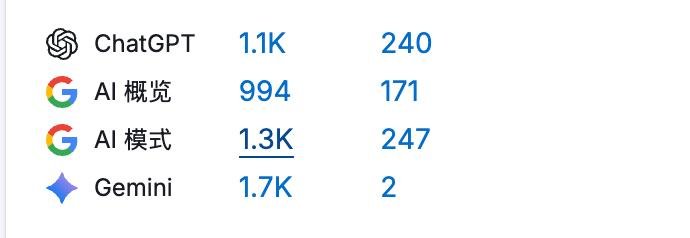
If your site is invisible to ChatGPT and Perplexity, it is almost always one of these reasons.
You wrote for Google, not AI
Keyword-stuffed paragraphs, thin content, missing structure. AI rewards clarity, not keyword density.
You are not cited anywhere else
AI cross-checks claims. If only your own site says you are the “best supplier,” you are not authoritative.
Your content is generic
AI is trained to filter content that mirrors 1,000 other pages. “Top 10 Tips” articles get deprioritized.
No structured data
Without schema markup, AI guesses what your page is about — usually wrong.
Slow site or blocked crawlers
If robots.txt blocks GPTBot, PerplexityBot, ClaudeBot, GeminiBot — or your site loads in 6 seconds — they skip you.
No real authority signals
No Wikipedia entry, no PR, no consistent brand mentions across the web. AI has nothing to validate.
The fix is GEO. There is no shortcut. Only structurally better content with third-party validation gets cited.
SEO vs GEO: How They Relate
SEO and GEO are not opposites. They share roughly 70% of the same playbook — but optimize for different end consumers.
SEO
Optimizes for human readers clicking links. Goal: rank in top 10 results, drive clicks to your site.
GEO
Optimizes for AI engines extracting answers. Goal: get cited inside the AI’s response, build visibility even with zero clicks.
| Dimension | SEO | GEO |
|---|---|---|
| Optimized for | Click-through rate | Direct extraction |
| Key target | Title tags & meta | First 100 words of body |
| Query type | Keyword volume | Question-shaped |
| Measured by | Rankings & traffic | AI citations & mentions |
| Engines | Google primarily | ChatGPT, Perplexity, Gemini, Claude, Copilot, Grok |
Practical takeaway: Do not drop SEO. Add GEO on top. The same article can be optimized for both — but the structural choices (Q&A format, citations, schema, dated freshness) lean GEO.
Summary
GEO is SEO for the AI era. It is how you get cited inside ChatGPT, Perplexity, and Gemini answers when users ask questions about your industry.
Five things actually drive GEO: be the most complete answer on a narrow topic; use clean HTML structure; cite real data and authoritative sources; get mentioned across the web; make your site machine-readable.
Most websites are invisible to AI because they were built for Google’s old playbook. The fix is not more content. It is structurally better content with third-party validation.
GEO Mind Map
Content
- Question-shaped headings
- First-100-words answers
- Original data & research
- FAQs and Q&A blocks
- Comparison tables
Technical
- Schema.org markup
- llms.txt file
- Allow AI bots
- Fast load speed
- Clean HTML hierarchy
Authority
- Trusted backlinks
- Reddit & Quora mentions
- PR & media coverage
- Wikipedia presence
- Podcast appearances
Tracking
- Profound
- Otterly
- Athena
- Goodie
- Brand monitoring
Future
- Personalized answers
- Visual & video GEO
- Paid AI placements
- Agent-driven purchases
FAQ
How long does GEO take to show results?
Four to twelve weeks. AI engines re-index content faster than Google but require multiple cross-mentions before treating you as authoritative.
Do I need to drop SEO and switch to GEO?
No. SEO drives click traffic. GEO drives AI citations. Run both. They share most of the same foundations.
Which AI engines should I optimize for first?
ChatGPT (largest user base), Perplexity (highest commercial intent), and Google AI Overviews (built into search). These three cover roughly 85% of generative search traffic.
Does GEO work for small businesses or only big brands?
It works better for small businesses. AI engines reward niche depth over generic authority. A focused 50-article site about one topic can outrank a generic media site for that specific topic.
How do I know if my site is already cited by AI?
Ask the major AI engines directly. Type prompts like “best [your category] in [your region]” into ChatGPT, Perplexity, and Gemini. If your brand is not mentioned, you have a GEO problem. Tools like Profound and Otterly track this systematically.
What is the single most important GEO action I can take this week?
Audit your top five commercial pages. Rewrite the first 100 words of each as a direct, complete answer to the main question your customer asks. Add an FAQ section underneath with five to ten question-shaped H3s. That alone typically lifts AI citation rates within two to four weeks.
Will GEO be replaced by something else?
The name might change. The principle will not. As long as AI sits between users and content, optimizing for AI extraction logic will matter.
Pingback: 人工智能企业网站设计——企业如何利用人工智能更快地构建专业网站
Pingback: How to Improve SEO Ranking in 2026: A Guide - dongshumarketing.com